Phil Harris
freespace

Veteran Addiction & Recovery Support.
Veteran Addiction & Recovery Support
Addiction and recovery can be shaped by military experience, transition from service, identity, trauma, moral injury, physical health, relationships and changes in structure and purpose.
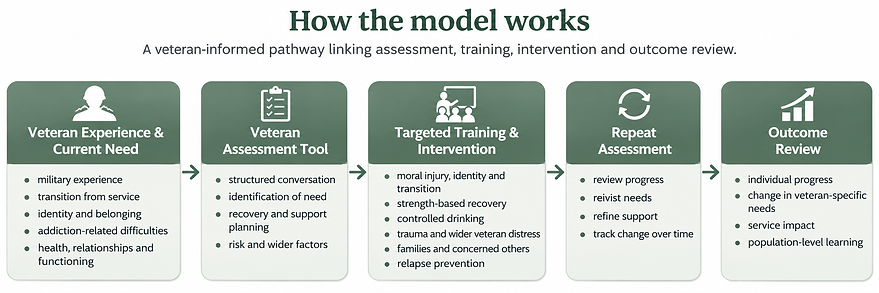
Veteran Addiction & Recovery Support brings these factors together through specialist training, assessment, intervention support and service development designed specifically for organisations working with former members of the Armed Forces.
Try the Veteran Assessment Tool
A veteran-specific assessment and outcome tool has been developed to help workers explore addiction-related need within the wider context of a veteran’s life.
It looks beyond substance use or behaviour alone, helping practitioners consider current difficulties alongside military and transition factors, health, relationships, functioning, risk and recovery needs.
The tool is designed to support:
-
structured conversations with veterans
-
consistent identification of need
-
recovery and support planning
-
decisions about what can be supported within a service and when additional or specialist help may be needed
-
repeat assessment and review of change over time
Try the Veteran Assessment Tool here
A Whole-Programme Approach
The assessment tool forms part of a wider veteran-specific workforce development programme.
The programme explores how military service can shape a person’s life course, identity and moral development — and how these experiences can continue to influence wellbeing, relationships, substance use and recovery long after service has ended.
Particular attention is given to the challenges associated with transition from military to civilian life: changes in role, purpose, belonging and structure; the reinterpretation of past experiences; and regrets or difficulties that may become more significant after leaving the Armed Forces.
The programme also recognises that veteran distress is not limited to PTSD. Military service, including deployment in asymmetric conflicts, can expose personnel to complex moral situations in which actions taken, witnessed, prevented or survived may conflict with deeply held values.
For some veterans, moral injury, guilt, shame, anger or a changed view of themselves and others may therefore be central to understanding later difficulties.
This provides a different starting point for addiction support.
Rather than asking only what someone is using, how much, or whether they meet criteria for a particular disorder, practitioners are encouraged to understand how military experience has shaped the person they became, what changed after service, and what role alcohol, drugs, gambling or other behaviours now play within that wider story.
Assessment-Led Training and Intervention
The veteran assessment and outcome tool sits at the centre of the programme.
It can help identify areas where additional support may be helpful and where staff may benefit from more specialist knowledge or intervention skills.
I provide veteran-specific training in areas including:
-
Moral Injury, Identity & Military Transition — exploring guilt, shame, responsibility, belonging, loss of role, post-service regret and changes in identity.
-
Strength-Based Recovery — drawing on valued military experiences, capabilities, relationships and sources of identity, and considering how these can support recovery.
-
Established Drinking Patterns & Controlled Drinking — understanding how drinking patterns may have developed or been reinforced through military culture and social experience, and supporting realistic change where controlled drinking is appropriate.
-
Trauma, PTSD & Wider Veteran Distress — recognising trauma-related difficulties while also considering moral injury, transition, loss, identity and regret.
-
Families & Concerned Others — understanding how military experience, transition and addiction can affect partners, families and wider support networks.
-
Relapse Prevention in Veteran Life — exploring how relapse risk can be influenced by identity, isolation, loss of structure, anniversaries, social networks, emotional pressure and changes in post-service life.
Training can be commissioned as individual modules or brought together into a tailored workforce-development programme.
Linking Military Experience to Outcomes
Because the assessment considers veteran-specific experiences as well as current addiction and recovery needs, it can do more than provide an initial picture of difficulty.
The same areas can be reviewed over time, allowing services to examine how changes in factors linked to military experience relate to changes in addiction, wellbeing and recovery outcomes.
This can help organisations explore not only whether support is making a difference, but also where change is occurring and how veteran-specific factors may be connected to that change.
Flexible Support for Organisations
Support can be commissioned as a single training module, a wider workforce-development programme, or a broader package combining:
-
assessment and outcome tools
-
veteran-specific training
-
intervention development
-
service and pathway design
-
implementation support
-
referral and decision-support processes
-
quality assurance and review
-
outcome reporting linked to VALOUR
The aim is to help organisations develop a coherent veteran-informed approach rather than simply add isolated training courses to an existing service.
For more details, contact me here: